1.
 My film (Invoked) challenged a few conventions of a
horror movie, although my aim when writing and designing the storyboard was to achieve
the classic first kill in a slasher movie, much like Halloween (1978), rather than
attempt to challenge any conventions that are already present within the
industry. Saying that, I have attempted to fuse together two sub-genres of
horror, I have added a supernatural element to the classic slasher storyline. I
wanted a single person with undetermined fate to be in trouble, and for
audiences not to attach with this character, as they would presume that he
would not be around for long, and this was achieved by killing off this
character before the bulk of the titles began, while also introducing the
audience to the main antagonist of the movie, which is not conventional in a horror, usually the antagonist is obscured or only revealed late in the movie. What I have filmed acts as a pre-title sequence.
My film (Invoked) challenged a few conventions of a
horror movie, although my aim when writing and designing the storyboard was to achieve
the classic first kill in a slasher movie, much like Halloween (1978), rather than
attempt to challenge any conventions that are already present within the
industry. Saying that, I have attempted to fuse together two sub-genres of
horror, I have added a supernatural element to the classic slasher storyline. I
wanted a single person with undetermined fate to be in trouble, and for
audiences not to attach with this character, as they would presume that he
would not be around for long, and this was achieved by killing off this
character before the bulk of the titles began, while also introducing the
audience to the main antagonist of the movie, which is not conventional in a horror, usually the antagonist is obscured or only revealed late in the movie. What I have filmed acts as a pre-title sequence. The music I use is more suited to
a thriller than horror, yet the intense chase that I attempted to convey is
suited more to the intense, suspenseful music rather than the usual slow,
creepy music associated with horrors, which challenges the conventions. As well as this, the quick editing
between shots causes the film to feel intense, it goes with the music and the
general action of the movie, and this can be typical of either a horror or a
thriller as both include intense action sequences. I used the special effects
to create a sense of power about the antagonist, his hand glows a light blue
colour, as do his eyes, I got this idea from the animated television series
Avatar: The Last Air Bender, which depicts the protagonist’s (Aang’s) eyes
glowing blue to emphasise his power when bending the elements. I challenge the
convention of the colour blue being associated with good, for example in Star
Wars where blue or green lightsabers are considered to belong to the good-
jedi, while red belong to the evil- sith, and challenge that convention by
giving the evil character a blue glow. When it comes to lighting, I changed the
colours within my film to make it darker, although the film happens in the day, I challenge the convention that bad things only happen in the dark, like in Nightmare On Elm Street (1984), in my movie, I give you a reason to be scared of the light.
The music I use is more suited to
a thriller than horror, yet the intense chase that I attempted to convey is
suited more to the intense, suspenseful music rather than the usual slow,
creepy music associated with horrors, which challenges the conventions. As well as this, the quick editing
between shots causes the film to feel intense, it goes with the music and the
general action of the movie, and this can be typical of either a horror or a
thriller as both include intense action sequences. I used the special effects
to create a sense of power about the antagonist, his hand glows a light blue
colour, as do his eyes, I got this idea from the animated television series
Avatar: The Last Air Bender, which depicts the protagonist’s (Aang’s) eyes
glowing blue to emphasise his power when bending the elements. I challenge the
convention of the colour blue being associated with good, for example in Star
Wars where blue or green lightsabers are considered to belong to the good-
jedi, while red belong to the evil- sith, and challenge that convention by
giving the evil character a blue glow. When it comes to lighting, I changed the
colours within my film to make it darker, although the film happens in the day, I challenge the convention that bad things only happen in the dark, like in Nightmare On Elm Street (1984), in my movie, I give you a reason to be scared of the light.2.
 My male protagonist, according to the new class system
brought out by the BBC, is part of the Technical Middle Class group; these are
people whose families are quite well off and enjoy a wide variety of cultural
mediums, they tend to socially interact with those of a similar class, which
explains his fear of the wild man that my antagonist is made to be, he has
never seen anything like it before, this class group common, he is also a young
adult which is typical of a horror movie, and it’s convention of killing off a
group of teens/young adults that get caught up in something bad, such as Friday 13th (1980). My antagonist however is meant to be a modern take on an
Aztec; he lives in the forest, like a hermit, and thus, is poor, but hunts his
own food and is very territorial, this is his motivation for killing people
that enter his domain. He is a man, which is conventional for a horror movie,
the tall, strong murderer that the protagonist could not over power if he even
attempted to do so, again, like Friday 13th Part 2 (1981), with the seemingly
invincible Jason Voorhees. The killer is also white, which matches the conventions of a horror movie, such as Se7en (1995), where the killer is played by Kevin Spacey.
My male protagonist, according to the new class system
brought out by the BBC, is part of the Technical Middle Class group; these are
people whose families are quite well off and enjoy a wide variety of cultural
mediums, they tend to socially interact with those of a similar class, which
explains his fear of the wild man that my antagonist is made to be, he has
never seen anything like it before, this class group common, he is also a young
adult which is typical of a horror movie, and it’s convention of killing off a
group of teens/young adults that get caught up in something bad, such as Friday 13th (1980). My antagonist however is meant to be a modern take on an
Aztec; he lives in the forest, like a hermit, and thus, is poor, but hunts his
own food and is very territorial, this is his motivation for killing people
that enter his domain. He is a man, which is conventional for a horror movie,
the tall, strong murderer that the protagonist could not over power if he even
attempted to do so, again, like Friday 13th Part 2 (1981), with the seemingly
invincible Jason Voorhees. The killer is also white, which matches the conventions of a horror movie, such as Se7en (1995), where the killer is played by Kevin Spacey.3.
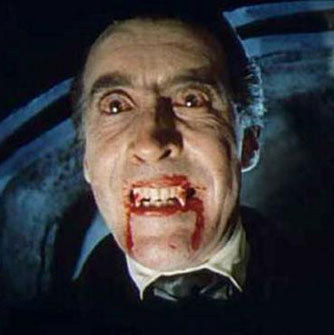
The film studio that I would get to distribute my movie
would be Hammer Films Productions; this is because Hammer Film Productions is
known for its distribution of horror movies ever since it was started in 1934,
it has released such classics as Dracula (1958) starring Christopher Lee, all the way
up to the modern successes such as Woman in Black (2012) starring Daniel Radcliff. The
company’s longevity and consistent success proves to me that it would be the
perfect production company to distribute my movie.

4.
The audience for my movie would be adults, this is because
it would contain a lot of gore; an example of this gore is in the pre title
sequence that I have filmed, when my protagonist’s heart is ripped from his
chest. Much like the Saw franchise (2004-2010), I will attempt to blend gore with a
gripping story line, rather than the gore just be a gimmick, so that the adults
watching my movie will want to know what happens to the characters, why an
Aztec is in this time and place and other such questions rather than just
waiting for the next gory scene.
 The fact my movie has a lot of gore in will
primarily draw in a male audience, although not to generalise, women may also
be interested. I feel that, as I plan for the main cast to be young adults,
then young adults will be drawn to the movie as they can relate to the
characters more. Class wise, I think all classes would be interested in the
movie, there will be no real focus on any type of class, but the group of young
adults I plan for the movie will be primarily Typical Working Class. Again,
with ethnicity, there will be no focus on a particular race in the movie, apart
from the antagonist being Aztec, which is an extinct race so there is no real
implication on the movie.
The fact my movie has a lot of gore in will
primarily draw in a male audience, although not to generalise, women may also
be interested. I feel that, as I plan for the main cast to be young adults,
then young adults will be drawn to the movie as they can relate to the
characters more. Class wise, I think all classes would be interested in the
movie, there will be no real focus on any type of class, but the group of young
adults I plan for the movie will be primarily Typical Working Class. Again,
with ethnicity, there will be no focus on a particular race in the movie, apart
from the antagonist being Aztec, which is an extinct race so there is no real
implication on the movie.5.
 I have attracted my audience through the promise of a gory
film with a gripping storyline and realistic special effects, although I will
include the typical storyline of a slasher movie in which a group of teens are
picked off one by one but with elements of the paranormal, the main protagonist
will not be obvious so people will be unaware of who is going to survive, and
the longer the members of the group survive, the more they shall discover about
the sinister past of the antagonist. If I were to have an advertising campaign,
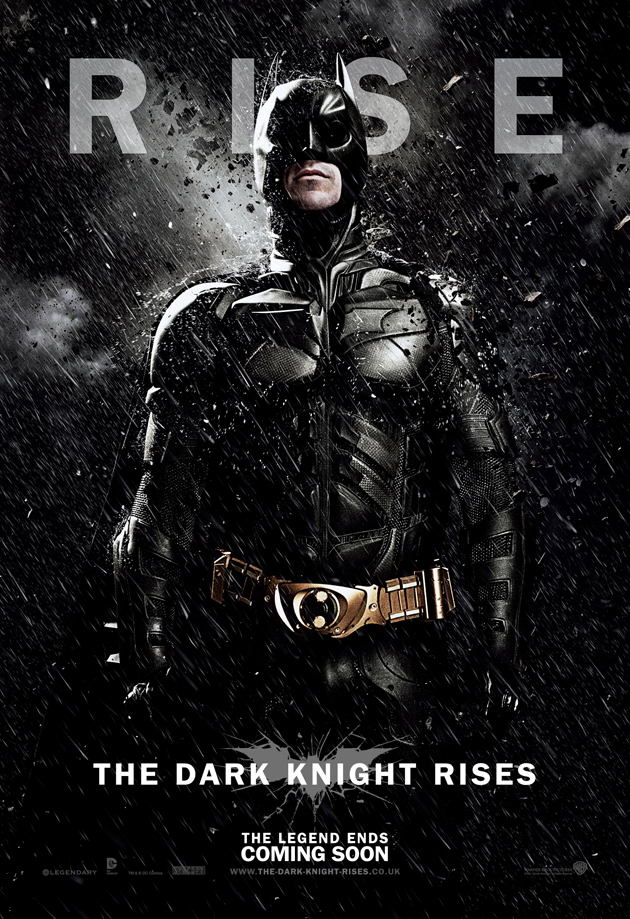
I would begin a viral marketing campaign (like when Cloverfield released fake news reports onto the internet) by making a deal with Google so that they hide Aztec symbols around the
world on their maps, and then challenge people to find these symbols. Then, if
people travel to the location at which the Aztec symbol appears on the map
there will be an invitation to the premiere of the movie waiting for them, where
they will get to meet all the actors, writers and the director and experience a paid night in a five star
hotel in London, where the premiere shall be held. I got the inspiration for
this campaign from The Dark Knight Rises who’s advertising campaign was to post
the locations of hundreds of Batman logos graffitied in cities around the world
on the Warner Bros web page that were to be found by the general public. For
every piece of graffiti that fans found, Warner Bros would release a frame of
the trailer, which is similar to my idea to have the fans race to locations in
order to win an invitation. My movie would also have an official web page, a
Facebook page and a Twitter page, which would allow fans of the film to be kept
up to date with news, allow them to download desktop wallpapers and watch the
trailers, this content will also be accesible via scanned QR images.
I have attracted my audience through the promise of a gory
film with a gripping storyline and realistic special effects, although I will
include the typical storyline of a slasher movie in which a group of teens are
picked off one by one but with elements of the paranormal, the main protagonist
will not be obvious so people will be unaware of who is going to survive, and
the longer the members of the group survive, the more they shall discover about
the sinister past of the antagonist. If I were to have an advertising campaign,
I would begin a viral marketing campaign (like when Cloverfield released fake news reports onto the internet) by making a deal with Google so that they hide Aztec symbols around the
world on their maps, and then challenge people to find these symbols. Then, if
people travel to the location at which the Aztec symbol appears on the map
there will be an invitation to the premiere of the movie waiting for them, where
they will get to meet all the actors, writers and the director and experience a paid night in a five star
hotel in London, where the premiere shall be held. I got the inspiration for
this campaign from The Dark Knight Rises who’s advertising campaign was to post
the locations of hundreds of Batman logos graffitied in cities around the world
on the Warner Bros web page that were to be found by the general public. For
every piece of graffiti that fans found, Warner Bros would release a frame of
the trailer, which is similar to my idea to have the fans race to locations in
order to win an invitation. My movie would also have an official web page, a
Facebook page and a Twitter page, which would allow fans of the film to be kept
up to date with news, allow them to download desktop wallpapers and watch the
trailers, this content will also be accesible via scanned QR images.  The premiere shall have a range of A-list and Z-list stars invited to
it, including actors, directors and general famous faces, all the way to a
famous Big Brother candidate, as well as the stars of the film course. I shall
also place billboards on the side of roads for drivers to see and trailers on
television. Hopefully If I put all these things in place then word of my movie
will reach everyone, so that everyone gets excited about it and I will make a
large profit at the box office. Profit will also be made in the longtail
through DVD/Blu-ray and merchandise sales.
The premiere shall have a range of A-list and Z-list stars invited to
it, including actors, directors and general famous faces, all the way to a
famous Big Brother candidate, as well as the stars of the film course. I shall
also place billboards on the side of roads for drivers to see and trailers on
television. Hopefully If I put all these things in place then word of my movie
will reach everyone, so that everyone gets excited about it and I will make a
large profit at the box office. Profit will also be made in the longtail
through DVD/Blu-ray and merchandise sales.6.
 During the planning, filming and editing process I have
learnt a lot about the film making process. During planning I learnt how to
design a story board effectively, how to lay it out, and the type of
information needed to read it effectively during the filming process. While
filming I learned how to use the Sony HD 1080i camcorder in order to capture
the best shots, I learnt how to change focus and re-watch clips that had
recently been taken to determine whether I needed to film them again or not. I
also learned how to set up a tripod correctly, how to set it up and attach a
camera, using the built in spirit level to ensure the camera was level. Before
filming I needed to choose my filming locations, the inspiration for a forest
based horror movie was the movie Shrooms, I thought about all the places within
driving distance which would be suitable for my movie, I decided on Hopwas
Woods over Kingsbury Water Park as Kingsbury Water Park was more likely to have
pedestrians in the background which could potentially ruin the mood of my
movie.
During the planning, filming and editing process I have
learnt a lot about the film making process. During planning I learnt how to
design a story board effectively, how to lay it out, and the type of
information needed to read it effectively during the filming process. While
filming I learned how to use the Sony HD 1080i camcorder in order to capture
the best shots, I learnt how to change focus and re-watch clips that had
recently been taken to determine whether I needed to film them again or not. I
also learned how to set up a tripod correctly, how to set it up and attach a
camera, using the built in spirit level to ensure the camera was level. Before
filming I needed to choose my filming locations, the inspiration for a forest
based horror movie was the movie Shrooms, I thought about all the places within
driving distance which would be suitable for my movie, I decided on Hopwas
Woods over Kingsbury Water Park as Kingsbury Water Park was more likely to have
pedestrians in the background which could potentially ruin the mood of my
movie.
When the editing process began (on Adobe Premiere) I quickly
developed my skills in uploading, cutting and piecing different clips together
in order to create my movie, I used the software’s colour corrector to make my
clips a little darker in order to create a moodier atmosphere. I also used the
edge feather effect when in a point of view shot to show that it was indeed a
point of view shot and that the beholder is feeling groggy. When finding a font
for my titles, I used the webpage ‘dafont.com’, it was originally black text
with a white background, but I used Adobe Fireworks to invert the colours.
When I wanted to add a backing track to my movie I looked on
‘incompetech.com’ to find incidental music that I felt had the most appropriate
mood to go with my film, this music is copyright free, in the case of the parts I have filmed, the chase
scene required action music, but with a modicum of suspense, to keep with the
horror vibe, and I managed to find a track with a good balance. I also used ‘freesfx.co.uk’
in order to add foley sounds that would have been too difficult for me to
create myself, such as the bone crunching and squelching sound heard when my
protagonist has his heart ripped from his chest. From these processes I learned
how to select appropriate sounds and music for the correct moments.

7.
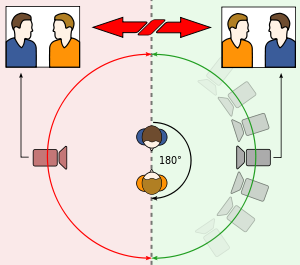
Since my preliminary task I have learned a lot about the film making process; I have learned about synergy and the research needed to be carried out before even beginning to plan a movie, how to use a camera to it’s potential, and the rules and conventions that film makers abide by in order to create the sense of immesion that we desire from a movie. Rules such as the 180 degree rule which states that a camera should stay on one side of a two people having a conversation and only change sides if it is shown to do so, as to not confuse the audience, although I do not use this rule within my movie for conversation (as there is none), I did have to ensure that it always looked like my protagonist was running in a single direction, not in circles or back and forth, I did this by trying to only film on one side of an 180 degree line at my filming location, although some shots needed to break the rule to be as effective as I wanted. With these shots I ensured that during editting the direction my protagonist was running was clear. I do use a match on action however, which switches the camera around to give the illusion an action bing taken out in real time, an example of this in my movie is when my protagonist is on his knees just after waking up from being knocked out and sees the shadow of my antagonist, he quickly turns and the camera cuts to the new angle that my protagonist is looking at. I did not use eye-line match in my movie as it is primarily used in conversation, and my movie has none. Eye-line match is when two people are hving a conversation and you ensure that their eyes are level to one another so that one does not look ridiculously tall or short compared to the other. A shot-reverse-shot is when a shot is showing somebody looking at somebody else and the camera switches sides, usually to show the other person looking back at them, and the camera cuts back to the original shot, it is usually used in conversations to show characters looking at one another. As I have no conversations in my film, I have not used a shot-reverse-shot.