Before we can discuss horror, we must first ask 'What exactly is horror?' The word is defined as an intense feeling of fear, shock, or disgust, but can classic horror films like 'Jaws' be categorised under that? In my opinion, no, to me horror is not related to us as the audience, but more to how the characters feel in the scene. Were we truly terrified when we saw a shark approaching the characters? Probably not, but I'm willing to bet the characters were pretty scared. We put ourselves in the character's shoes and get a thrill from it, yet still we continue to watch, that is the beauty of horror.

Horror is not the most popular of genres, only 5.6% of films that were released last year where horror, the top performing movie being Paranormal Activity 2 (according to http://statisticalyearbook11.ry.com/?id=82792), this may be as horror is generally aimed at an older audience, with most horrors being rated as 18s, which cuts out a large amount of people from being able to see and pay for the films, causing their profits to be reduced.
Horror has an array of monsters at its disposal to get the adrenaline flowing within an audience; whether it be a vampires, zombies or werewolves, making you frightened to go outside, or the common man, driven insane, making the dark corners of your house ever creepier. Horror works by running your imagination wild, by making the sound of a twig snapping a murderous killer, rather than something far more innocent. These monsters can achieve fear through jump scares (when the scene builds up to something jumping out at the characters, subsequently making the audience jump) or by staying in your mind even after the movie has finished, haunting your thoughts, making you unable to sleep.
 The French author and film theoriest Christian Metz wrote the book 'Language and Cinema' (1974), it states that in any genre here are four phases, they are called the 'Model of Genre Development', they consist of;
The Experimental Stage: Horror was first inspired by the First World War, German Expressionalism was born and shadows were manipulated, examples of this are 'Noferatu' (named Noferatu due to Bram Stocker's family owning the copyright and stopping the name Dracula being used) and 'The Cabinet of Dr. Caligari'. The experimental stage is when a genre is being explored and the themes are being experimented with.
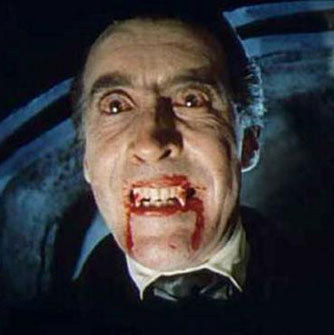
The Classic Stage: Movies then have their narrative conventions established, they are defined, this is usually the most successful period. Movies such as Dracula and Frankenstein belong in this stage.
When television began to make an appearence in the 1950's, the film industry took a hit, but Hammer Studios fought back with their reimagining of classic movies, such as when they used big horror movie stars Peter Cushion and Christopher Lee to make a new Hollywood version of Dracula.
The Parody Stage: When films are released that follow the same conventions as a genre, but put them forward in a comical way, the genre is in the parody stage. It helps when the genre is losing steam and they are given a fresh new approach, bringing in a hole new audience. 'Abbot and Costello Meet Frankenstein', 'Carry On Screaming' and the 'Scary Movie' series are examples of parody.

The Deconstruction Stage: The final stage in the model, this is when the genre begins to be deconstructed, and amalgamated with other genres to create sub-genres, examples being Se7en (Gory Horror), The Sixth Sense (Paranormal Horror), The Blair Witch Project (Documentary Horror) and Scream (Teen Horror). These films pay homage to the classic movies that came before them.



No comments:
Post a Comment